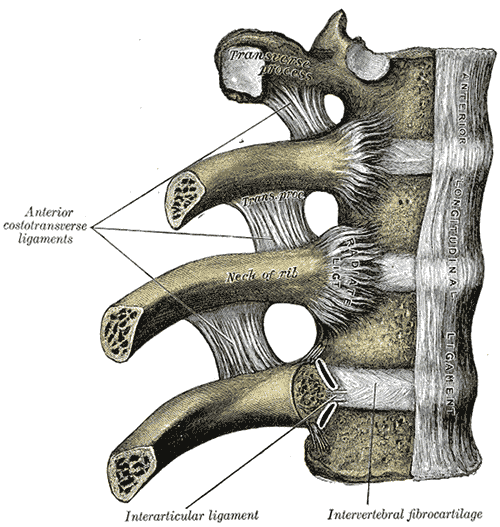
The rib heads are the hidden multiplier in Wing Chun. One shoulder joint becomes twenty-four joints when the ribs disengage from structural compression. That means the load is divided, resistance drops and suddenly generating huge power feels effortless.
Most people think power comes from tension and effort. That is the opposite of what Wing Chun teaches. In this art we maximise economy of motion, relaxed structure, and total body weight transmission instead of relying on brute force.
Before Hong Kong: Confined and Limited
Before my trip to Hong Kong, my Wing Chun was good structurally but still limited in expression. I understood the importance of relaxation intellectually, I could soften muscles, flow in drills and connect my centre of weight to technique.
But what I didn’t know was how much tension could hide in the rib cage.
The ribs were compressed against the spine. That compression locked the shoulder into doing most of the work. That meant the shoulders alone had to solve every weight transmission problem. That approach has a ceiling.
The Release Moment: Spine and Rib Heads
Then it happened.
I was at home after a full day of teaching. Started at 10am. It was now around 11pm and I was still training. That was normal for me back then. Long days. Deep focus. No shortcuts.
In the room I had a large divider wall used for sound recording. It was heavy. Around 30 kilos. I placed my fist against it and gently applied weight, not pushing, just feeling the load through my structure.
I was sensing how the weight travelled through the arm into the body.
Then, out of nowhere, something shifted.
I felt my ribs release off the spine. Not collapse. Not go soft. They simply disengaged from a kind of invisible compression that had always been there. The rib heads felt like they separated from the thoracic spine just enough to articulate freely.
In that instant everything changed.
Instead of the shoulder joint carrying the load, the weight spread through the entire rib cage. It was as if each rib head began sharing the work. One joint became many articulations. The resistance that used to sit in the shoulder dissolved.
The shoulder did not become stronger.
It became distributed.
And when resistance divided, effort disappeared.
The 30 kilo divider wall suddenly felt empty. Not metaphorically. Physically. What felt heavy one second felt like it weighed almost nothing the next. From 30 kilos to 30 grams in perception.
I lifted it off the floor with almost no effort.
No winding up.
No bracing.
No muscular strain.
Just structure.
What changed was not force production. What changed was load transmission. The weight was no longer being forced through a single hinge at the shoulder. It was being absorbed and redistributed through the rib heads into the spine.
That was the moment I understood something critical.
Power stops feeling like effort when the body stops fighting itself.
Before that night, even though I was relaxed compared to most, there was still hidden compression in the rib cage. The thoracic spine was subtly locked. The ribs were acting like a rigid shield instead of a dynamic suspension system.
When they released, the entire torso became a floating lattice.
From that point on, punching was different. Chi Sau was different. Even simple forward pressure felt different. The shoulder no longer fatigued. The chest no longer braced. The arm felt like an extension of the spine rather than something attached to it.
Power stopped being something I tried to generate.
It became something that passed through me.
Why This Matters for Wing Chun Power
Wing Chun isn’t about muscular strength, it is about body mechanics, skeletal structure and intent. The basic forms like Siu Nim Tao are not arbitrary hand shapes. They are systems designed to develop structural integration, relaxation, and weight transmission from the ground up through the spine.
When the rib cage locks:
The shoulder becomes overloaded
The spine resists rotation
The arms act independently
Power becomes muscular effort
When the rib cage releases:
The whole torso turns into a power transmission system
Shoulders are freed from isolation
Spine and ribs articulate with intent
Total body weight becomes the source of force
This is why Wing Chun power feels different from any other martial art. It is not brute force. It is efficient physics.
One Shoulder Becomes Twenty-Four Joints
The difference is like comparing:
One hinge against resistance
versus
Twenty-four tiny articulations sharing the load
When resistance is divided, required effort drops exponentially. That is structural biomechanics, similar to how superior body architecture allows a smaller person to generate power that overwhelms a larger opponent without tension.
This echoes a core Wing Chun principle: matching structure to physics. You don’t fight force with force. You use body leverage and relaxed connections to redirect and transmit weight through the most efficient path.
The Real Lesson: Power is Revealed, Not Created
Here is the key takeaway:
Power isn’t made stronger by pushing harder. It is revealed when resistance is removed.
Before the rib heads released, I was trying to add something. Afterward, I realised I had to remove something.
You don’t add more muscle. You extract less structural tension. You spread the weight. You let the ribs and spine articulate.
That is when Wing Chun stops being something you “do” and becomes something your body naturally expresses.
What This Means for Your Training
If you want real power in Wing Chun:
Focus on releasing structural compression first.
Soft muscles are just the beginning. The deeper level is freeing the rib heads and spine so weight moves through you as a connected whole.
Relaxation isn’t about flopping muscles. It is about removing obstacles to transmission. It is about sensing your body as a single integrated system instead of a set of isolated parts.
Conclusion: The Change Was Permanent
After that moment, my Wing Chun was never the same again. Not because I learned something new, but because I learned to feel what was already there.
True power in Wing Chun is not effort. It is integration, distribution and effortless transmission of weight from the centre of mass through every joint.
That is real structure. That is real power.